The Best Bloomberg Terminal Alternative for Retail Investors in 2026
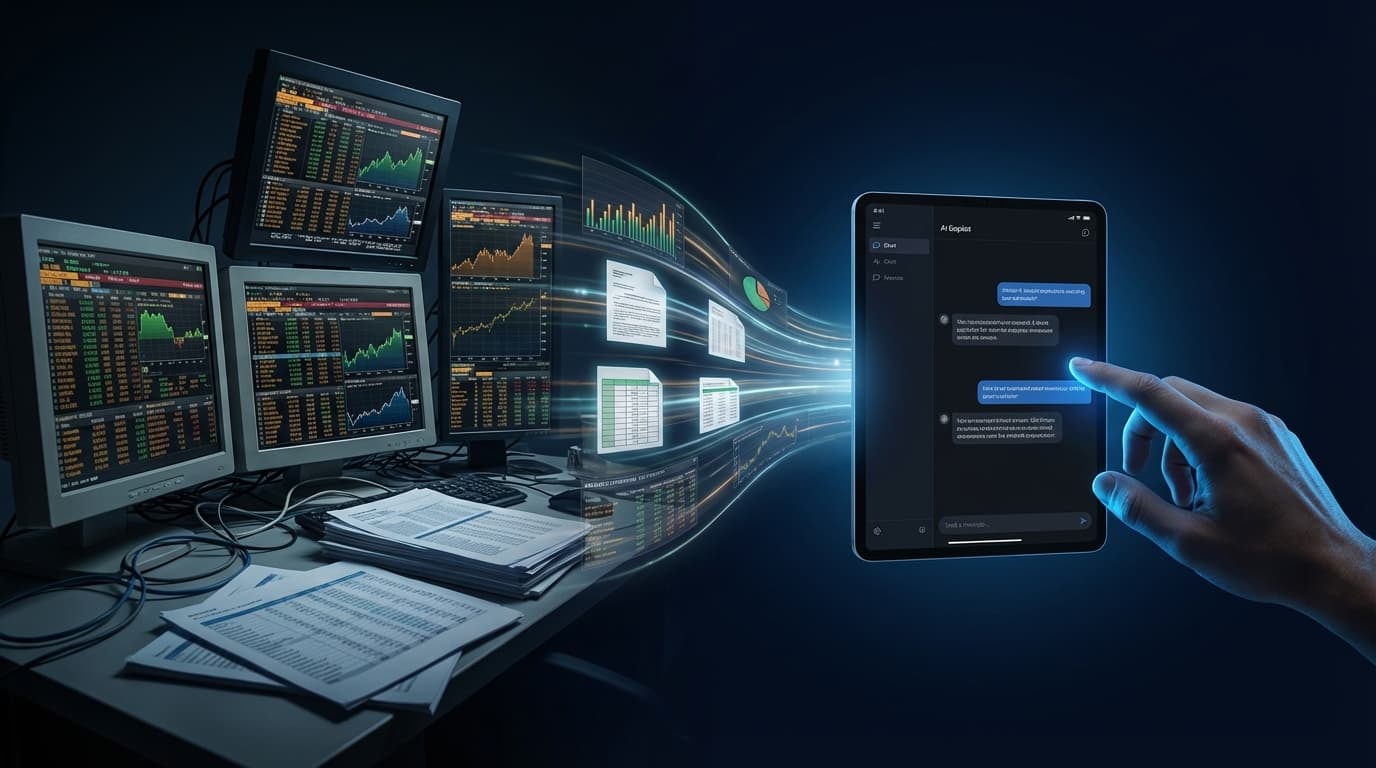
If you are a retail investor asking for the best Bloomberg Terminal alternative, the short answer is: use an AI research workflow, not another dashboard. For most people doing fundamental analysis, that gives you 80 to 90 percent of the practical value at a tiny fraction of Bloomberg's cost.
Bloomberg still wins when your job depends on proprietary real-time feeds, execution integrations, and fixed-income desk workflows. But if your day is mostly SEC filings, earnings transcripts, portfolio notes, and memo writing, a modern AI research assistant for finance is usually the better decision.
That is why most independent investors, small funds, and advisory teams now compare Bloomberg against AI copilot workflows instead of old-school "cheaper terminal" products.
Quick Verdict: Should You Replace Bloomberg?
- Choose an AI alternative (like Francis) if: You mostly do long-form research, 10-K/10-Q review, earnings call synthesis, and investment memo drafting.
- Keep Bloomberg if: You require low-latency institutional data feeds, cross-asset pricing depth, and terminal-native desk tooling.
- Hybrid is common: Some teams keep a limited number of Bloomberg seats and run AI for research throughput across the rest of the team.
Why Most "Bloomberg Alternatives" Still Disappoint
Most alternatives still behave like data browsers: they show metrics but do not do the analyst work for you. You can get a P/E ratio quickly, but you still spend two hours answering the real question: why margins moved, why guidance changed, and whether management credibility improved or deteriorated.
The bottleneck for retail and independent analysts is not raw access anymore. It is turning filings, transcripts, and footnotes into a decision you can act on before the market narrative shifts.
What an AI Bloomberg Alternative Actually Does
With a finance-native AI workflow, you can compress repetitive research tasks into minutes:
- 10-K delta review: Compare this year's filing versus last year's and isolate only what changed in risk factors, margins, and segment commentary.
- Earnings call extraction: Pull exact management quotes on guidance, capex plans, and demand trends without rereading full transcripts.
- Model support work: Reconcile line items across filings and spreadsheet tabs so your actual analysis starts sooner.
Who Should Still Use Bloomberg
You should still pay for Bloomberg if your edge depends on proprietary market plumbing, not just research speed. Good examples include multi-asset trading desks, rates and credit specialists, and institutional teams that need real-time depth all day.
If you are mostly a long-horizon equity investor, independent analyst, advisor, or small research team, you are likely overpaying for infrastructure you do not fully use.
Best For / Not For
Best for
- Independent investors doing bottoms-up stock research
- Boutique funds that need analyst leverage without extra headcount
- Advisors building client memos and recurring market briefs
Not ideal for
- Teams requiring full institutional market-data depth 24/7
- Desks that rely on terminal-native trade and messaging workflows
- Users who need millisecond-sensitive execution data
Bloomberg vs. AI Finance Assistants (Like Francis)
| Decision factor | AI assistant workflow | Bloomberg Terminal |
|---|---|---|
| Typical cost | Under $100/month | ~$24,000+ per year |
| Core advantage | Faster synthesis and workflow automation | Depth of proprietary data and terminal ecosystem |
| 10-K and transcript work | Automated extraction and summaries | Manual analyst processing |
| Learning curve | Low (prompt and iterate) | High (terminal fluency required) |
| Best fit | Fundamental research teams and independents | Institutional desks and data-intensive trading workflows |
Frequently Asked Questions
What is the best Bloomberg Terminal alternative for retail investors?
For most retail investors, the best Bloomberg alternative is an AI research assistant workflow that automates filing review, transcript synthesis, and memo prep. It usually delivers better cost-to-value than paying for institutional infrastructure.
How much does a Bloomberg Terminal cost in 2026?
Bloomberg Terminal is typically around $24,000 to $30,000 per user per year, depending on package and seat structure.
Can AI really replace a Bloomberg Terminal?
It can replace many research tasks, but not Bloomberg's proprietary real-time data stack. For many independent investors, replacing the research workflow is enough to skip the terminal.
Run institutional-style research without terminal pricing.
Use Francis to analyze filings, earnings calls, and portfolio notes in one workflow.
Try Francis Free